Ipas DRC
Non-profit organization
This blog was written by Habygaelle Muzie Kimbal Lombo, Patience Lisasi Lisika, and Nadia Lobo Jive (Ipas DRC).
This blog documents the process of developing a Values Clarification and Attitude Transformation (VCAT) training toolkit, highlights key lessons learned, and reflects on its relevance for initiatives supported by GPE KIX and the International Development Research Centre (IDRC).
Inspired by Ipas’ Values Clarification and Attitude Transformation (VCAT) model—originally developed in 2000 to address stigma, attitudes, and beliefs related to abortion—this gender- and inclusion-responsive training toolkit is the result of a collaborative effort between Ipas DRC, Ipas Francophone Africa, and Ipas Global, in partnership with the Kinshasa School of Public Health and Université Félix Houphouët-Boigny.
Designed to support durable shifts in attitudes and practices among education system actors, the toolkit was developed as part of a research project funded by the Global Partnership for Education – Knowledge and Innovation Exchange (GPE KIX), in partnership with the International Development Research Centre (IDRC).. It seeks to address gender-based violence (GBV) and discrimination in schools , while also making it possible to assess uptake and early effects.
Implemented in the Democratic Republic of Congo (DRC), Côte d’Ivoire, and Mali, the project is embedded within a multi-country consortium that leverages youth-led solutions and digital technologies to promote safety and inclusion in schools. Particular attention is given to pregnant adolescents, adolescent mothers, and gender non-conforming students, informed by research evidence documenting the violence and discrimination they face.
In the Democratic Republic of Congo, gender-based violence (GBV) and discrimination in school settings remain widely normalized. Research conducted under the project—including surveys with 4,915 secondary school students—shows that the vast majority of students are exposed to multiple forms of violence. Specifically, 84% report experiencing bullying, 76% report being subjected to corporal punishment, and 67% indicate having been exposed to sexual violence in school settings. These practices disproportionately affect specific groups, including pregnant girls and adolescent mothers, students with disabilities, and gender non-conforming youth.
Beyond their immediate impact on students’ safety and wellbeing, such forms of violence undermine school retention and learning outcomes, while reinforcing pre-existing social and gender inequalities.
Institutional responses to school-related GBV continue to rely primarily on regulatory frameworks, policies, and disciplinary sanctions. While these measures are essential, they remain insufficient when they fail to address the social norms, beliefs, and attitudes that shape everyday behaviors among teachers, school administrators, parents, and education authorities.
Yet these less tangible dimensions play a central role in the reproduction—or, conversely, the prevention—of violence and discrimination in schools.
In response to this gap, identified through research, Ipas and its partners developed a training toolkit grounded in the VCAT approach. By intentionally linking evidence, attitude transformation, and concrete practices for promoting safer and more inclusive schools, the toolkit creates structured spaces for individual and collective reflection. It enables participants to critically examine the values underlying educational practices, make their impacts visible, and initiate sustainable changes in attitudes.
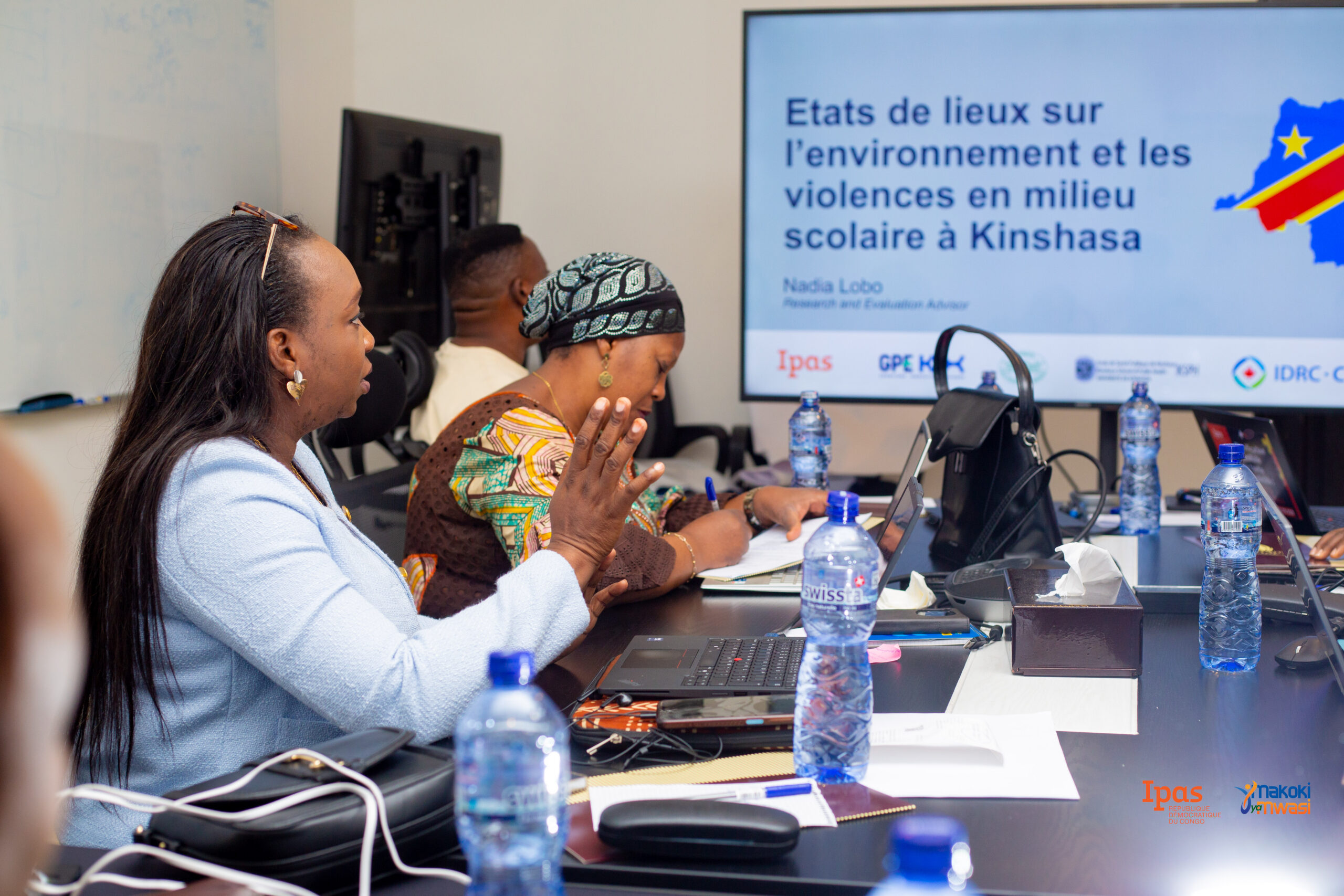
Building on research conducted in secondary schools, the project undertook a deep methodological adaptation process. Findings highlighted several persistent trends: the continued use of corporal punishment, the normalization of psychological violence, stigma toward pregnant girls, the invisibility of students with disabilities, and targeted violence against gender non-conforming youth.
Based on this evidence, Ipas DRC and its partners carried out a critical review of existing VCAT tools to identify exercises most relevant to school settings. Four exercises were selected and contextualized—Comfort Zone Continuum, Four Corners, Why Did They Leave School?, and Crossing the Line—with content reformulated to reflect lived realities in the Congolese context.
The development of the toolkit relied on a co-creation process involving Ipas DRC, Ipas Francophone Africa, and Ipas Global technical teams, alongside academic partners including the Kinshasa School of Public Health and Université Houphouët-Boigny.
The adaptation drew on Ipas methodological frameworks, national and international legal instruments on children’s rights, and resources produced by UNESCO and UNICEF. The process also underscored the limited availability of operational literature on school-related GBV, reinforcing the added value of the toolkit as a bridge between research and practice.
From the outset, the toolkit integrated an evaluation component through paired pre- and post-training tests designed to measure changes in knowledge, attitudes, and levels of engagement with issues related to gender, inclusion, and GBV.
This strengthens the toolkit’s credibility as a learning and knowledge capitalization tool, beyond its function as a training resource.
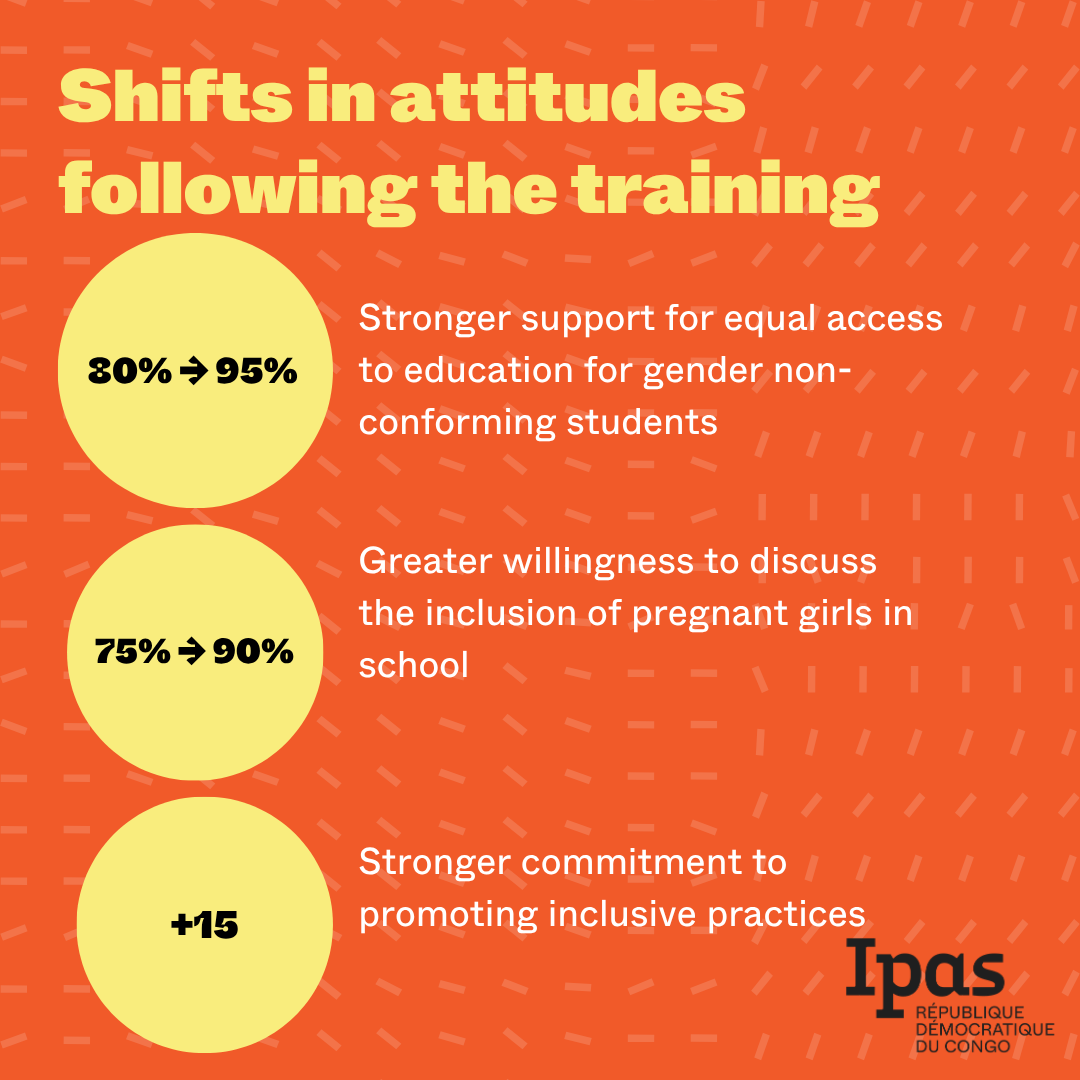
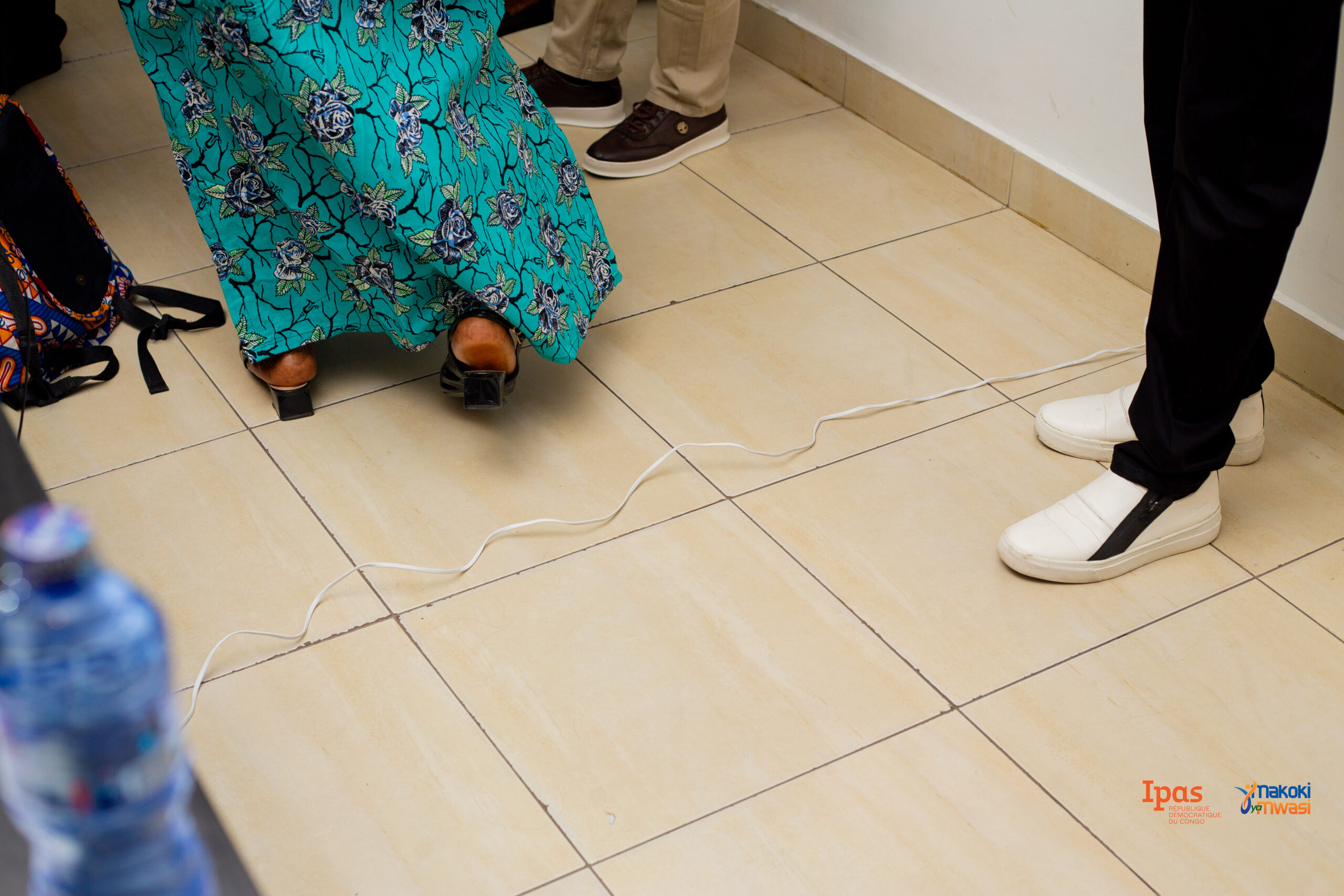
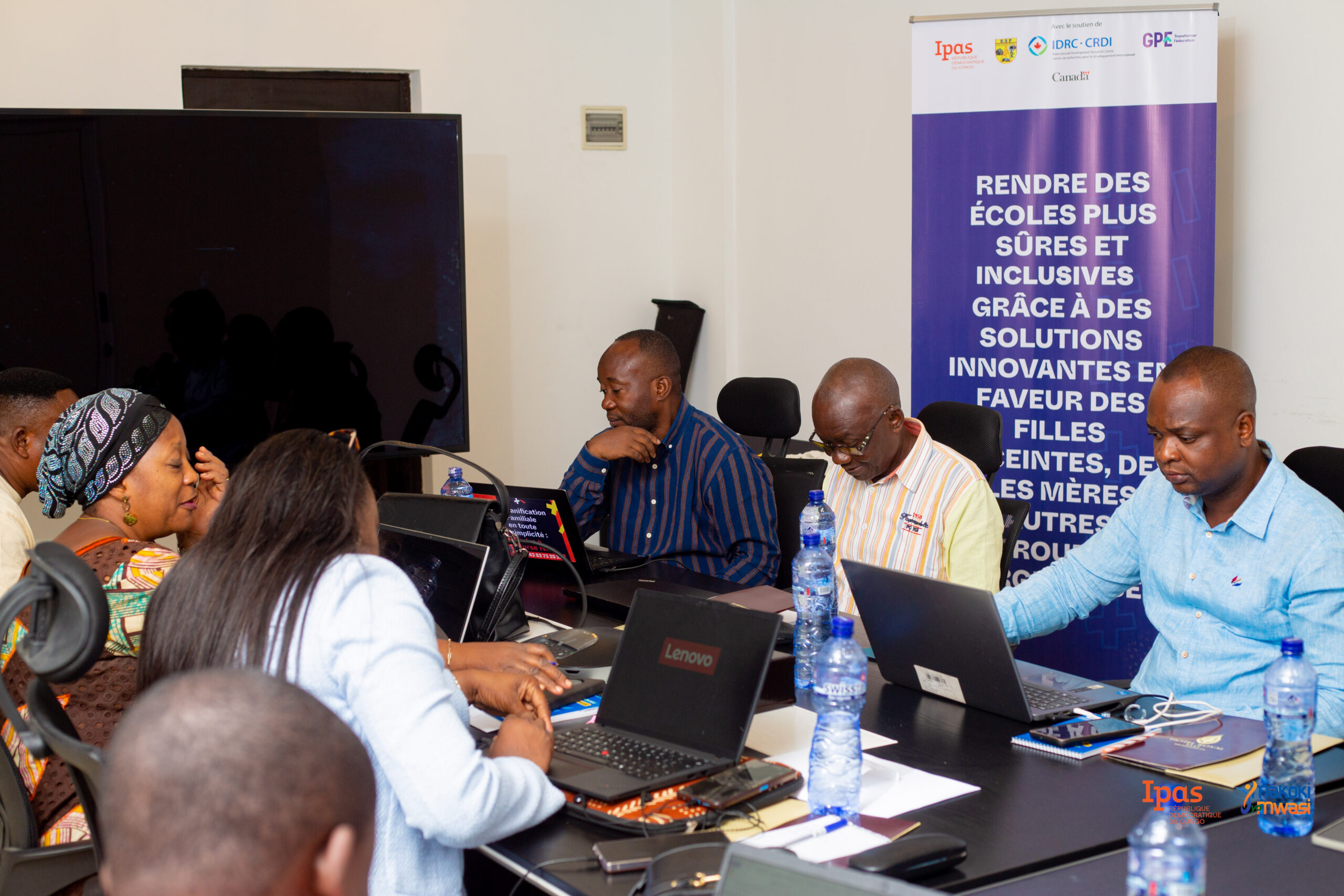
To foster long-term ownership and prepare for scale-up, the project adopted a training-of-trainers approach. Participants included representatives from the Ministries of Education and New Citizenship (life skills education division), Gender, Family and Children, and Health, Hygiene and Prevention (National Adolescent Health Program), as well as teachers, school leaders, and civil society actors, including organizations representing women, youth, and persons with disabilities.
For many participants, this was their first experience of a training approach centered on critically examining their own values, emotions, and professional practices.
Initial implementation revealed notable shifts: increased awareness of the violent nature of practices long perceived as normal, greater clarity around the roles of teachers and parent committees in violence prevention, and the emergence of school-based prevention and reporting mechanisms.
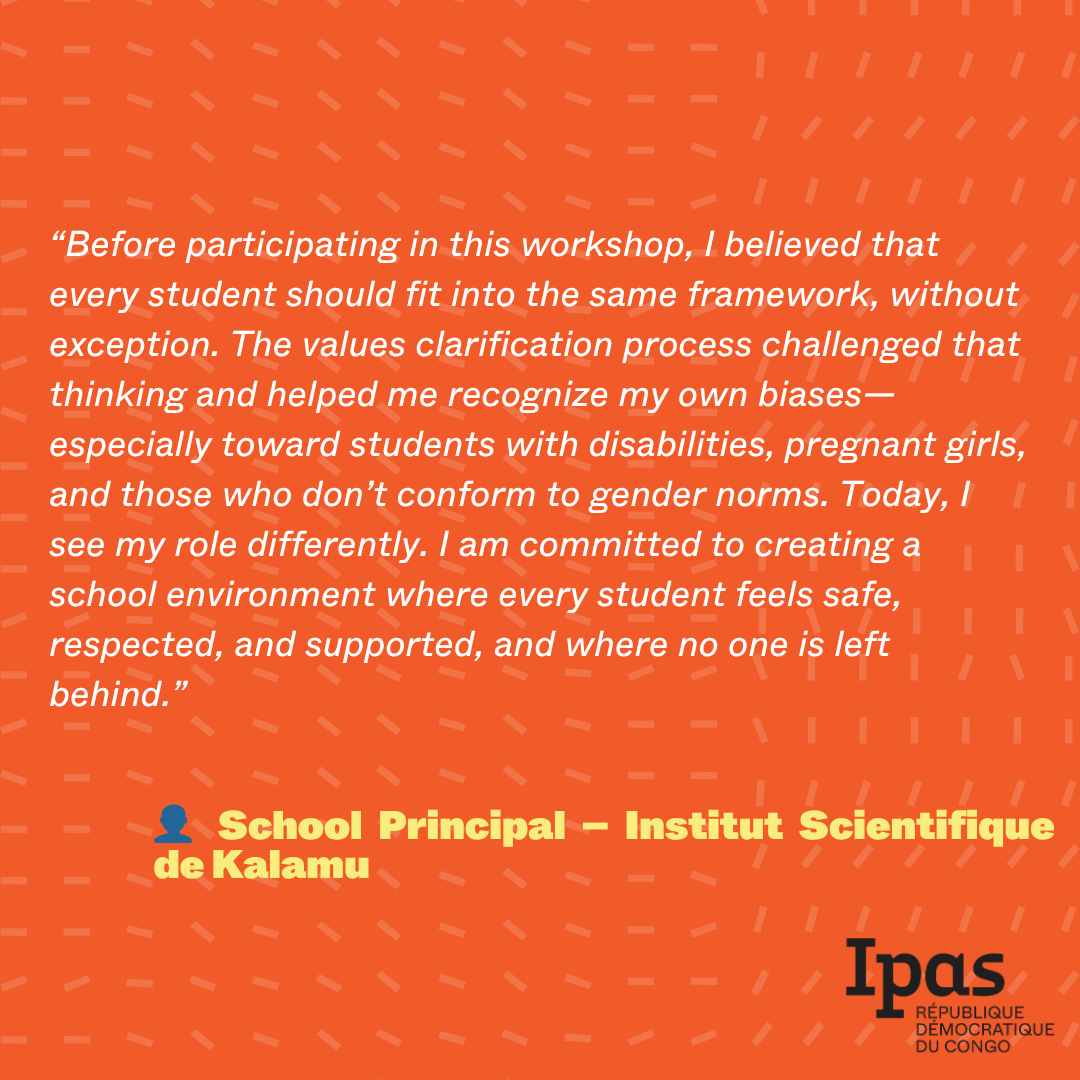
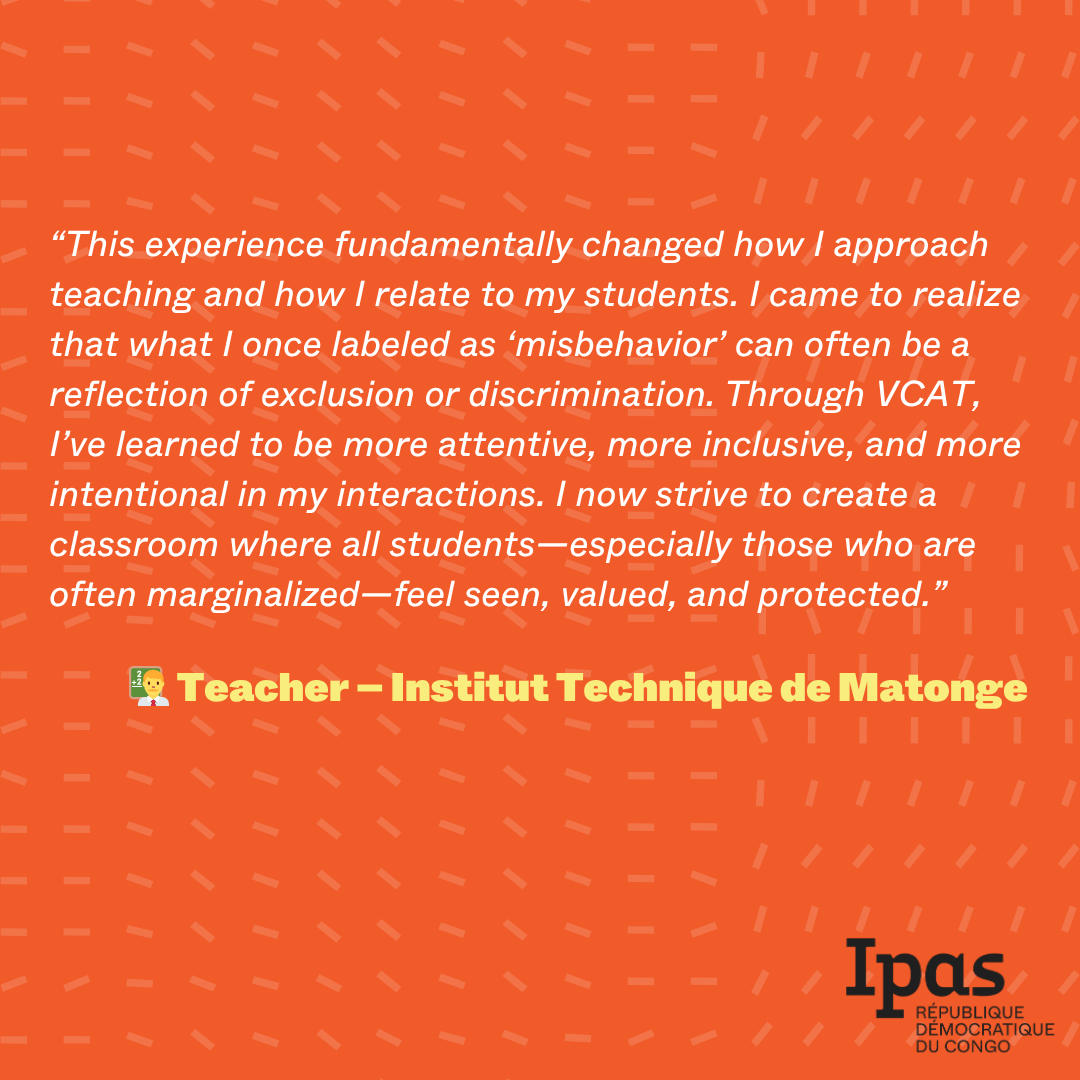
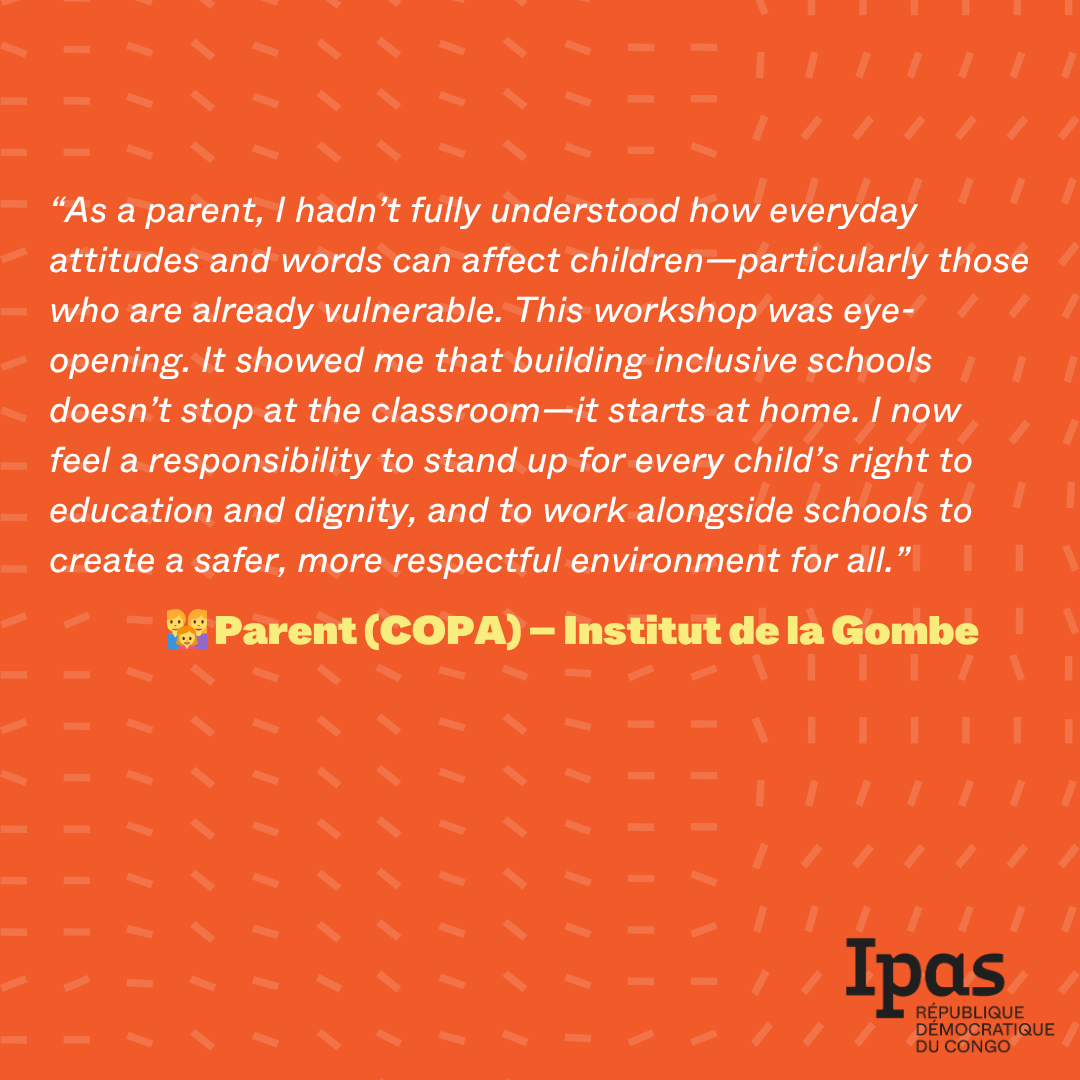
However, resistance persists—particularly regarding the abandonment of corporal punishment and the acceptance of gender non-conforming students—confirming that changing social norms is a gradual and non-linear process.
This experience highlights several transferable lessons for the GPE KIX community :
Next steps will focus on scaling up the toolkit, strengthening direct engagement with students, and anchoring safe and inclusive school approaches more sustainably within education policies.
For Ipas Global, Ipas Francophone Africa, Ipas DRC, and their academic partners, this toolkit represents a strategic lever for transforming education systems—placing dignity, inclusion, and the safety of every learner at the heart of action.