Ipas DRC
Non-profit organization
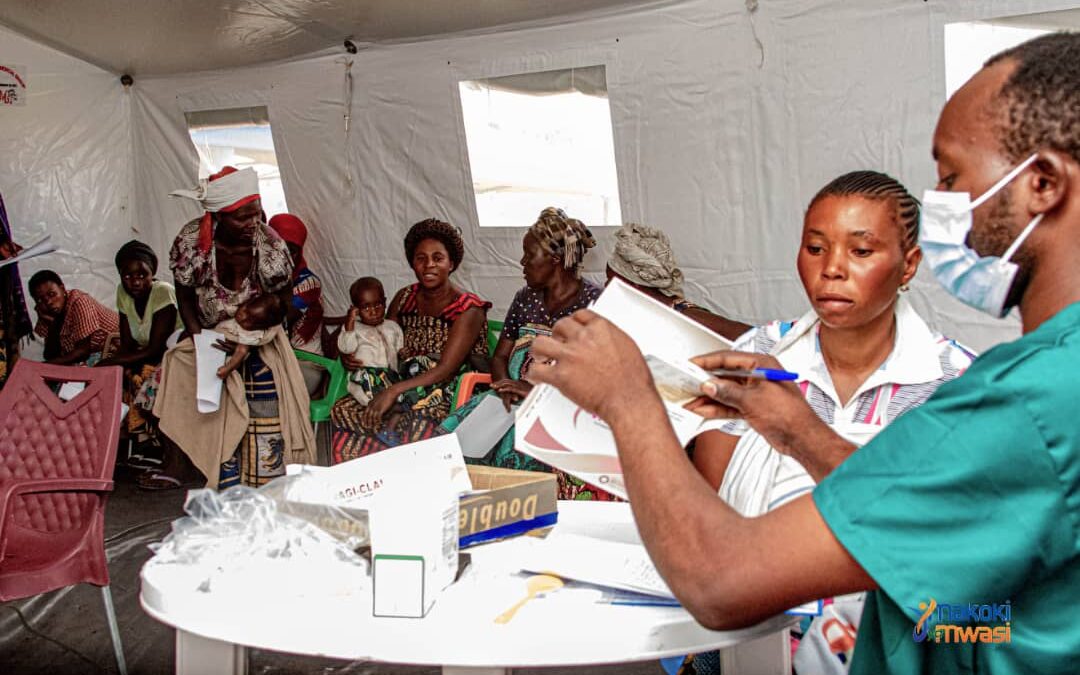
Ipas DRC works with local partners to educate all relevant stakeholders, including women and communities, about women’s newly expanded right to access safe abortion.
In collaboration with the Ministry of Health and key partners, we have helped develop new standards and guidelines for comprehensive abortion care that align with the Maputo Protocol, and we are now working to ensure their full implementation. We also train health care providers to offer abortion and contraception services, and we partner with community organizations and community health workers to ensure that women and girls have access to these services.
Securing progressive legislation, such as the Maputo Protocol, is an important step towards the realization of sexual and reproductive rights. Transforming these progressive laws into tangible services, equitably accessible without stigmatization, overcharging or rejection, is a journey that requires local ownership and effective community accountability mechanisms.
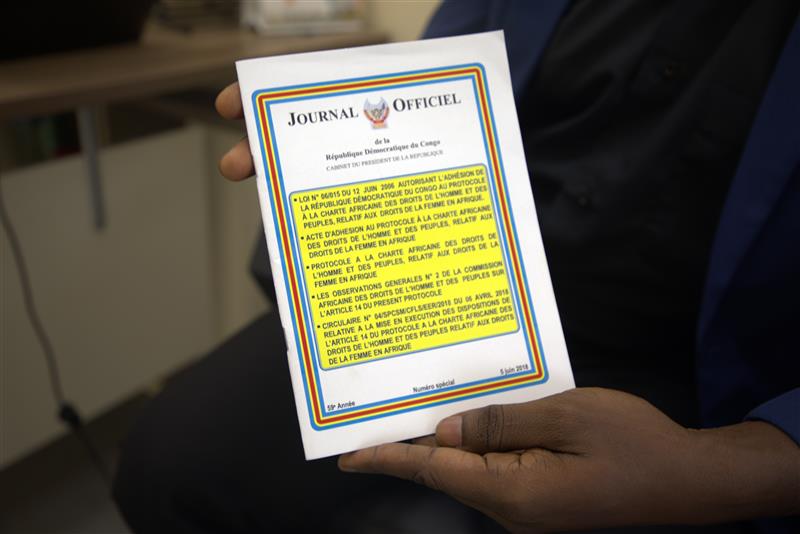
Since the publication of the Maputo Protocol in the Democrate Republic of Congo’s Official Gazette, making it applicable law in the country, Ipas DRC has been working tirelessly with the Ministry of Health to make it possible to offer safe abortion services.
Beyond the progress made by the Ministry of Health in developing standards and guidelines, strategies and training modules for providers, and the availability of commodities including the Mifepack, real access to safe abortion services remains a real challenge for women, particularly adolescents and young girls.
Access routes remain strewn with barriers, and the healthcare system is not immune to client stigmatization, rejection and judgment, particularly for adolescents, young people and people living with disabilities.
Aware of these challenges, for the past 3 years Ipas RDC has been strengthening community accountability mechanisms, taking advantage of structures set up by the Ministry of Health at local level: the Comité de Développement des Aires de Santé, or “CODESA” for short.
Health Area Development Committees (CODESA) are community structures set up in health areas to strengthen community participation in the management and improvement of health services. They bring together community leaders, women and young people, as well as other key players, and play a central role in community mobilization, local advocacy and the monitoring of health services.
They act as a bridge between the community and health structures, facilitating dialogue, relaying people’s concerns and supporting initiatives to improve the quality and accessibility of care.
Ipas RDC supports CODESAs by, firstly, building the capacity of their members in sexual and reproductive health, safe abortion, family planning and care for survivors of gender-based violence (GBV), in order to improve their understanding and role in promoting these services. Secondly, to improve their functioning and coordination with the health zones; and finally, Ipas supports CODESA in community awareness-raising and advocacy activities, aimed at reducing stigma, breaking down socio-cultural barriers and promoting the integration and use of safe abortion, contraception and care services for survivors of GBV.
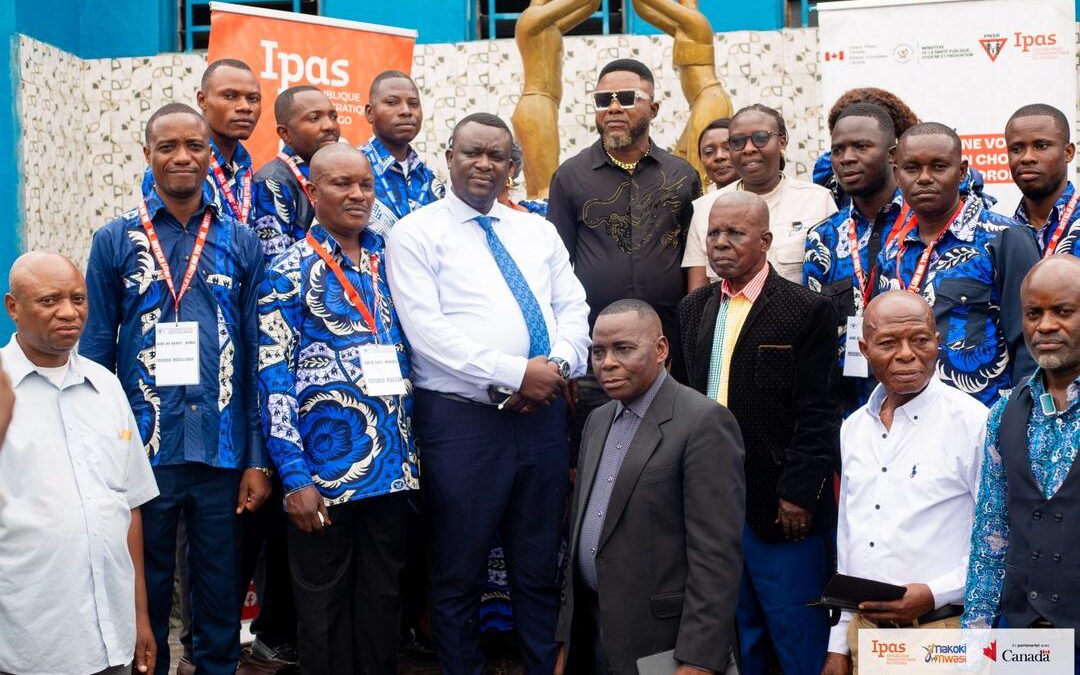
With this in mind, the official installation of the Comité de Développement des Aires de Santé (CODESA) office was held in the Kimbanseke Health Zone on January 22, 2026, with financial and technical support from Ipas, thanks to funding from Canadian Global Affairs (GAC). Mr. Patience Lisika, Community Mobilization Advisor at Ipas, emphasized that three key elements ensure the sustainability of healthcare interventions: community accountability, citizen participation and collaboration between the community and healthcare systems.
These elections for CODESA president are an important step in strengthening the community health system and citizen participation in the management of health services. The ceremony was held at the Kimbanseke town hall, in the presence of political, administrative and health authorities, including the town’s Bourgmestre (mayor), the Médecin Chef de Zone (MCZ), the Chef de Division (CD), and other stakeholders.
The Bourgmestre of Kimbanseke commune, Mr. Ngonga Kidumu Jeancy, praised the mobilization of communities and stressed the importance of CODESA as a framework for health management and promotion, serving as a bridge between health services and the community. He urged the president and his office to work closely with health authorities, head nurses and community leaders, and reiterated the commune’s commitment to supporting any initiative aimed at the well-being of women and girls.
This electoral process began on December 23 in the 11 health areas of the Kimbanseke Health Zone, with the election of CODESA (Présicodesa) presidents by community relays, representatives of local communities.
At the end of this first stage, the 11 elected Présicodesa elected the officers of the Union des CODESA (UCODESA), the community coordination and representation body for the health zone. At the end of the ballot, Mr David Makele was elected president of UCODESA and officially installed with his board, made up of 11 Présicodesa representing the different health areas of Kimbanseke, on Thursday January 22, 2026.
The UCODESA president-elect expressed his gratitude for the trust placed in him, and pledged to work closely with health authorities, community leaders and partners to strengthen links between the community and health systems, and facilitate access to care.
This support from Ipas is part of a significant step forward for the health system, marking the strengthening of a structured mechanism for community participation, essential for fostering trust between populations and health structures.

In the Democratic Republic of Congo, the Pakadjuma neighborhood in Kinshasa’s Limete commune is sadly known for its poor conditions, high prevalence of prostitution, criminality, rape and other forms of violence. Beneath this harsh reality, the area is home to young girls and women looking for better livelihood conditions and opportunities; for many of them, the sex trade becomes the only option left to survive in a rough environment without any hope of improvement. As a result, these women and girls face unwanted pregnancies, as they are inevitably compelled to use their bodies to ensure their future.
Amidst social inequalities, high illiteracy rates and a substantial number of teenage mothers, the local organization “Cadre de Récupération et d’Encadrement pour l’Epanouissement Intégral des Jeunes” (Creeij in acronym), whose main mission is to empower young people through training, capacity-building and apprenticeships for unemployed and out-of-school girls, launched its activities in the Pakadjuma neighborhood in 2017. Indeed, to address these needs, Creeij set up a training center in this community called “Center la Grace to provide vocational training and literacy courses, but above all to promote bodily autonomy and the sexual and reproductive health rights of women and girls in this neighborhood by providing them with reliable information on sexual health and family planning.
Despite the progress achieved so far, however, the center still faced several issues, among them rape and unwanted pregnancies leading to unsafe abortions. As Falonne Mayoke, director of the Centre la Grâce and Creeij’s program manager, explains, “it’s one thing to provide women and girl mothers with literacy and vocational training, but their challenges remain the same after the training: finding the money to feed their families, pay the rent and so on. The consequences are rape or unwanted pregnancy”. That’s why, to prevent unwanted pregnancies, and reduce the number of maternal deaths due to unsafe abortions, since 2019 Ipas RDC has been supporting Creeij to improve the community’s knowledge of the Maputo Protocol and its provisions for sexual and reproductive health information and services, including safe abortion.

Description générée automatiquementCreeij goes beyond identifying the need for sexual and reproductive health care and works with peer educators whose main mission is to help these women and girls manage their reproduction by providing them with information on sexual health and clearly explaining the provisions of the Maputo Protocol which authorizes safe abortion under certain conditions. These community change agents act as a bridge between the community and the Pakadjuma health facility, which provides sexual and reproductive health care, including abortion. As a result, the Centre la Grace registers the needs of young girls, and the peer educators in Creeij will accompany these young women to the health clinic supported by Ipas RDC.
These peer educators play an essential role, as the story of Maisha, a 22-year-old sex worker since the age of 12, clearly shows. After the loss of both her mother and father, Maisha began working as a sex worker to support herself and pay for her studies. “A few months ago, I became pregnant, and my friends advised me to have an unsafe abortion,” Maisha tells us. “Unfortunately the abortion went wrong and I started bleeding for days. At the time I was already a member of the Center but was too ashamed to tell them what was going on after what I had done. One day, I was at home, and I heard the peer educators on the street talking about where to have a safe abortion and how high-quality abortion care could save lives. As they were talking, they mentioned that “Centre la Grace” could refer to any abortion cases. I went there and luckily; they brought me to the clinic. Today I am alive.”
Today, Maisha is a healthier woman who is now taking a sewing course, has ceased sex work, and is hoping to buy a sewing machine very soon after her training, so that she can turn it into a profession.
In 5 years, Creeij has been able to meet a long-neglected need in this community, where women’s decision-making power is scorned. In addition to awareness-raising and referrals, the Packard project has enabled Creeij to address the safe abortion aspect for women and girls who, despite vocational training and the yearning to change their lives, had no choice but to become sex workers. Thanks to the vocational training at Creeij, women can now choose their profession, and thanks to the Packard project, they can now choose whether or not to carry unwanted pregnancies.”

Ipas DRC works with local partners to educate all relevant stakeholders—including women and communities—on women’s newly expanded right to access safe abortion.
In collaboration with the Ministry of Health and key partners, we helped draft new standards and guidelines for comprehensive abortion care that align with the Maputo Protocol and are now working to see that they are fully implemented. We also are training health-care providers to offer abortion and contraceptive care, and linking with community-based organizations and community health workers to ensure that women and girls know where they can access services.