
Ipas DRC
Non-profit organization

Securing progressive legislation, such as the Maputo Protocol, is an important step towards the realization of sexual and reproductive rights. Transforming these progressive laws into tangible services, equitably accessible without stigmatization, overcharging or rejection, is a journey that requires local ownership and effective community accountability mechanisms.
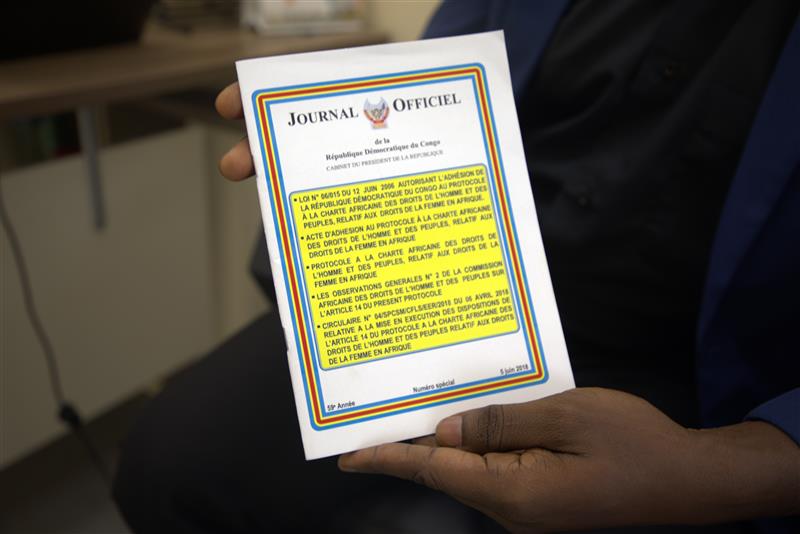
Since the publication of the Maputo Protocol in the Democrate Republic of Congo’s Official Gazette, making it applicable law in the country, Ipas DRC has been working tirelessly with the Ministry of Health to make it possible to offer safe abortion services.
Beyond the progress made by the Ministry of Health in developing standards and guidelines, strategies and training modules for providers, and the availability of commodities including the Mifepack, real access to safe abortion services remains a real challenge for women, particularly adolescents and young girls.
Access routes remain strewn with barriers, and the healthcare system is not immune to client stigmatization, rejection and judgment, particularly for adolescents, young people and people living with disabilities.
Aware of these challenges, for the past 3 years Ipas RDC has been strengthening community accountability mechanisms, taking advantage of structures set up by the Ministry of Health at local level: the Comité de Développement des Aires de Santé, or “CODESA” for short.
Health Area Development Committees (CODESA) are community structures set up in health areas to strengthen community participation in the management and improvement of health services. They bring together community leaders, women and young people, as well as other key players, and play a central role in community mobilization, local advocacy and the monitoring of health services.
They act as a bridge between the community and health structures, facilitating dialogue, relaying people’s concerns and supporting initiatives to improve the quality and accessibility of care.
Ipas RDC supports CODESAs by, firstly, building the capacity of their members in sexual and reproductive health, safe abortion, family planning and care for survivors of gender-based violence (GBV), in order to improve their understanding and role in promoting these services. Secondly, to improve their functioning and coordination with the health zones; and finally, Ipas supports CODESA in community awareness-raising and advocacy activities, aimed at reducing stigma, breaking down socio-cultural barriers and promoting the integration and use of safe abortion, contraception and care services for survivors of GBV.
With this in mind, the official installation of the Comité de Développement des Aires de Santé (CODESA) office was held in the Kimbanseke Health Zone on January 22, 2026, with financial and technical support from Ipas, thanks to funding from Canadian Global Affairs (GAC). Mr. Patience Lisika, Community Mobilization Advisor at Ipas, emphasized that three key elements ensure the sustainability of healthcare interventions: community accountability, citizen participation and collaboration between the community and healthcare systems.
These elections for CODESA president are an important step in strengthening the community health system and citizen participation in the management of health services. The ceremony was held at the Kimbanseke town hall, in the presence of political, administrative and health authorities, including the town’s Bourgmestre (mayor), the Médecin Chef de Zone (MCZ), the Chef de Division (CD), and other stakeholders.
The Bourgmestre of Kimbanseke commune, Mr. Ngonga Kidumu Jeancy, praised the mobilization of communities and stressed the importance of CODESA as a framework for health management and promotion, serving as a bridge between health services and the community. He urged the president and his office to work closely with health authorities, head nurses and community leaders, and reiterated the commune’s commitment to supporting any initiative aimed at the well-being of women and girls.
This electoral process began on December 23 in the 11 health areas of the Kimbanseke Health Zone, with the election of CODESA (Présicodesa) presidents by community relays, representatives of local communities.
At the end of this first stage, the 11 elected Présicodesa elected the officers of the Union des CODESA (UCODESA), the community coordination and representation body for the health zone. At the end of the ballot, Mr David Makele was elected president of UCODESA and officially installed with his board, made up of 11 Présicodesa representing the different health areas of Kimbanseke, on Thursday January 22, 2026.
The UCODESA president-elect expressed his gratitude for the trust placed in him, and pledged to work closely with health authorities, community leaders and partners to strengthen links between the community and health systems, and facilitate access to care.
This support from Ipas is part of a significant step forward for the health system, marking the strengthening of a structured mechanism for community participation, essential for fostering trust between populations and health structures.
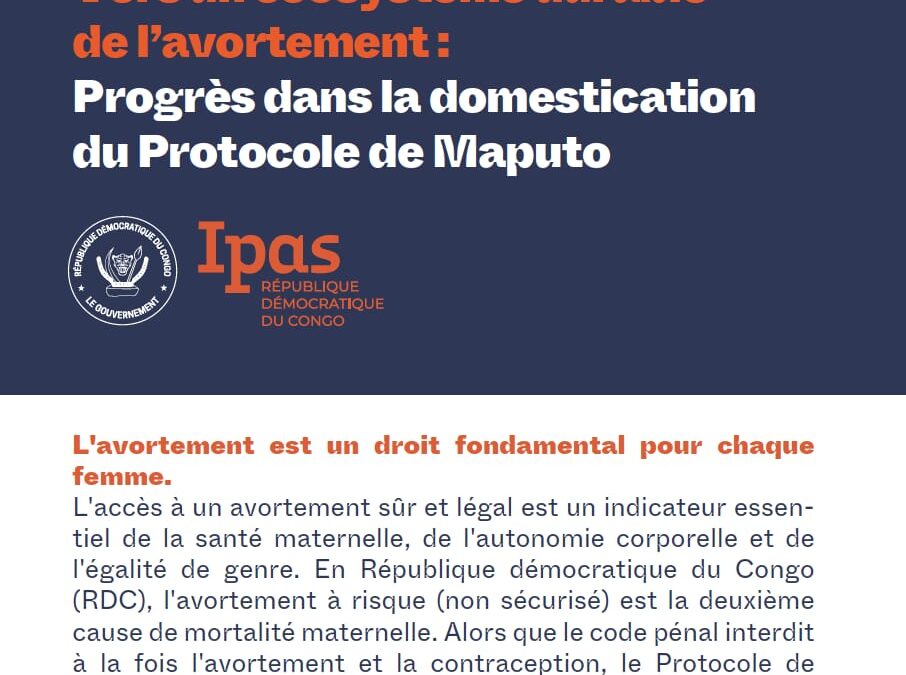

Ipas DRC works with local partners to educate all relevant stakeholders—including women and communities—on women’s newly expanded right to access safe abortion.
In collaboration with the Ministry of Health and key partners, we helped draft new standards and guidelines for comprehensive abortion care that align with the Maputo Protocol and are now working to see that they are fully implemented. We also are training health-care providers to offer abortion and contraceptive care, and linking with community-based organizations and community health workers to ensure that women and girls know where they can access services.

On July 11th, 2023, endorsed by the President of the Democratic Republic of Congo, Félix-Antoine Tshisekedi, the Ministry of Gender held a landmark celebration for the 20th Anniversary of the Maputo Protocol. This celebration united key stakeholders such as the Minister of Human Rights, Minister of Youth, representatives of the Ministry of Health, the Presidents Director of Cabinet, the Permanent Secretary of the Superior Judiciary Council, parliamentarians, the Canadian Ambassador and representatives of diplomatic corps (Sweden, Norway, Germany, Netherlands, and the UK), police and military corps, international organizations, gender-responsive media, researchers, legal actors, youth, women, civil society-organizations, and community leaders. The objective of this event was to celebrate and acknowledge the countries ownership of the instrument and the progress made over the last 20 years in domesticating the Maputo Protocol, highlight the innovative work and contributions of champions, and to reflect on the future and dialogue about scalable solutions with sustainable outcomes that bolster women’s rights in the country and beyond. “The strong mobilization of the government as well as the presidency for this celebration is outstanding; these leaders co-led panels and boldly spoke about the government’s responsibility in creating an enabling environment for women’s rights including abortion rights” stated Gisele Kapinga, High Commissioner at the National Commission for Human Rights.

Ministers, Director of Cabinet of the President, Partners and Donors. This celebration was marked by strong declarations from the government, parliamentarians, civil society leaders, and leading women’s rights activists.

The research on the impact of the domestication of the Maputo Protocol conducted by the University of Kinshasa School of Public Health in collaboration with Ipas and the Ministry of health presented during this event highlighted the challenges in its application on the field, especially within the judicial and health system.

Reflecting on the next steps with civil society organizations such as the Youth Sprint Movement, Women Lawyers Association, and partners (DKT, MSI, and Ipas) on what the next 20 years hold for the future of Congolese women and girls; these activists called for all stakeholders and donors to accelerate the full implementation of the Maputo Protocol by revising the penal code and all other laws that hinder women’s rights. The fervent engagement of diverse stakeholders supporting the implementation of the Maputo Protocol and safe abortion rights in the DRC, gives Ipas and partners leading the fight renewed hope and fuel to making the promises of the Maputo Protocol a reality for women and girls across the DRC.


Ipas Democratic Republic of Congo (DRC) recently helped develop a training curriculum and set of health system tools for comprehensive abortion care (CAC) in a vital step toward implementing the Maputo Protocol. These tools will enable access to legal and safe abortion care for women across the country by aligning the health system with standards and guidelines recently approved by the Ministry of Health that remove barriers of marital and parental consent and proof of rape.
“These new tools are a vital part of the DRC government’s efforts to promote reproductive justice as a critical component of women’s empowerment,” said Dr. Jean-Claude Mulunda, Director of Ipas Democratic Republic of Congo (DRC).
Ipas DRC will support expansion of these tools, as well as assist with follow-up and clinical mentoring of trained providers to ensure quality abortion care is available, accessible and affordable.
“The ratification of the Maputo Protocol has created a significant need to update our policies and management tools,” said Dr. Ilunga Bodi, the secretary general of health, at an endorsement ceremony for the tools and curriculum. “The step taken today will help strengthen the health system, facilitate the integration of CAC into the health system at all levels and permit us to finally fill the gap caused by the lack of credible abortion data.”
Dr. Anne-Marie Tumba, director of the Programme National de la Sante Reproductive (PNSR), said, “These tools will contribute towards the provision of holistic quality care to women and girls who desperately need them and will also reduce maternal mortality caused by unsafe abortions. It will allow the government to make decisions based on factual evidence.”