Ipas DRC
Non-profit organization
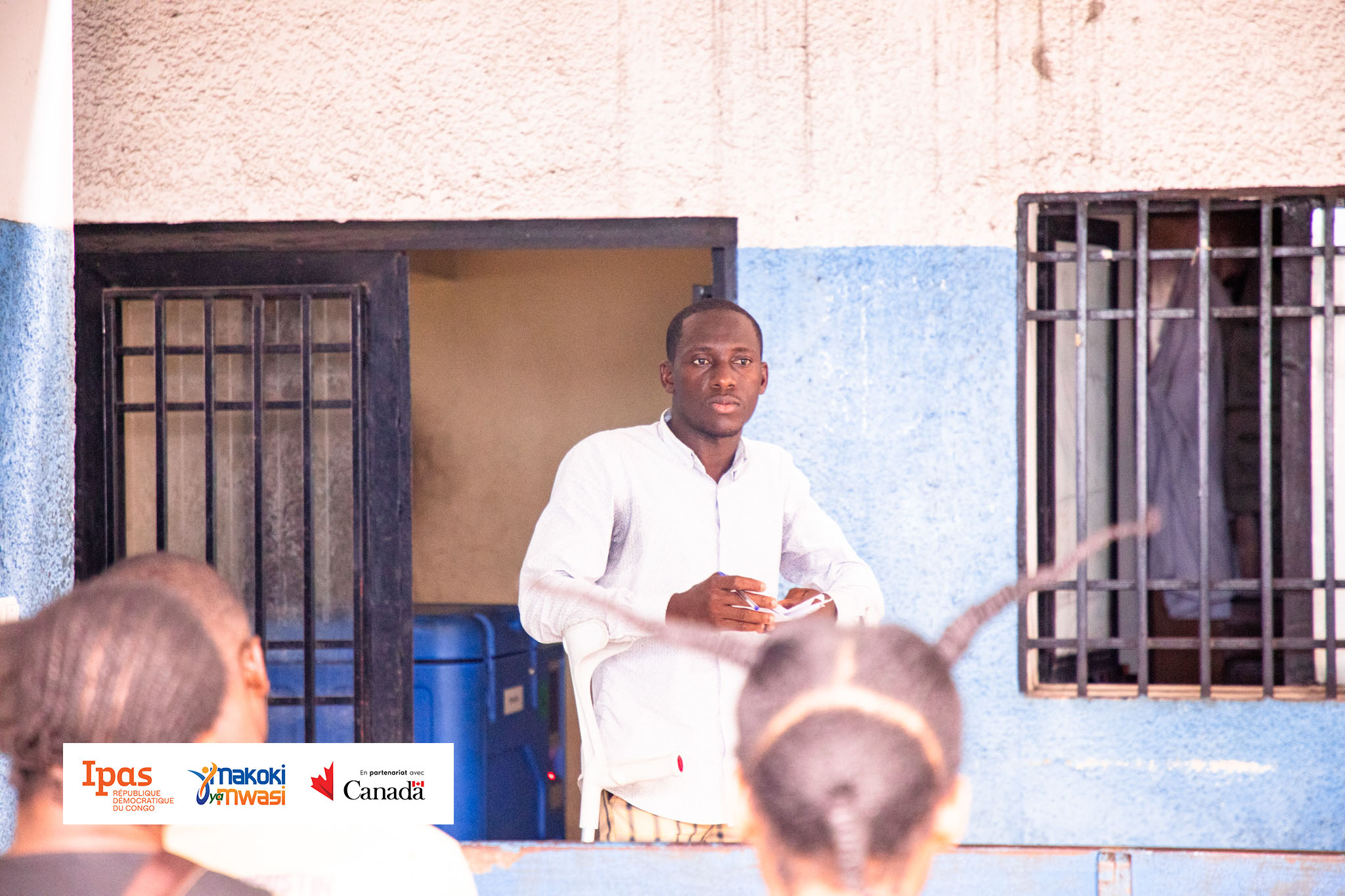
Diagnosed with a disability at a very young age, Paul Kwami grew up as the only one among seven children living with this condition. Now 25 years old, Paul serves as the president of the Association of Young People with Disabilities United for the Development of Kisenso (AJHUKAD) and works as a community health worker (RECO) in the Kisenso health zone. Each week, He conducts awareness activities across eight of the twenty‑two avenues within the REGIDESO health area—ensuring that critical information on sexual and reproductive health (SRH) reaches those who need it most.
His journey has been shaped by persistence and courage. In the beginning, he struggled with self‑stigma and doubted whether he would be accepted as a RECO, fearing how others would perceive him. Still, he chose to attend Ipas DRC’s trainings.
he shares.
Paul Kwami raising community awareness
Across the DRC, people with disabilities continue to experience significant barriers in accessing SRH services—driven by misconceptions, inaccessible information, and community stigma. Yet their leadership is essential to help women and girls understand and claim their reproductive rights, particularly in community engagement and awareness-raising.
In Kinshasa, many people with disabilities experience discrimination, especially women and girls seeking SRH services. These attitudes often stem from misinformation and harmful social norms.
Research conducted by the School of Public Health in 2024 revealed that knowledge about contraception remains low, with 50.1% of respondents believing that using a contraceptive method of her choice exposes a woman to health risks, and 70.7% think women should not access contraception without someone else’s authorization. These misconceptions highlight the urgency of community outreach and accurate SRH information for women and girls.
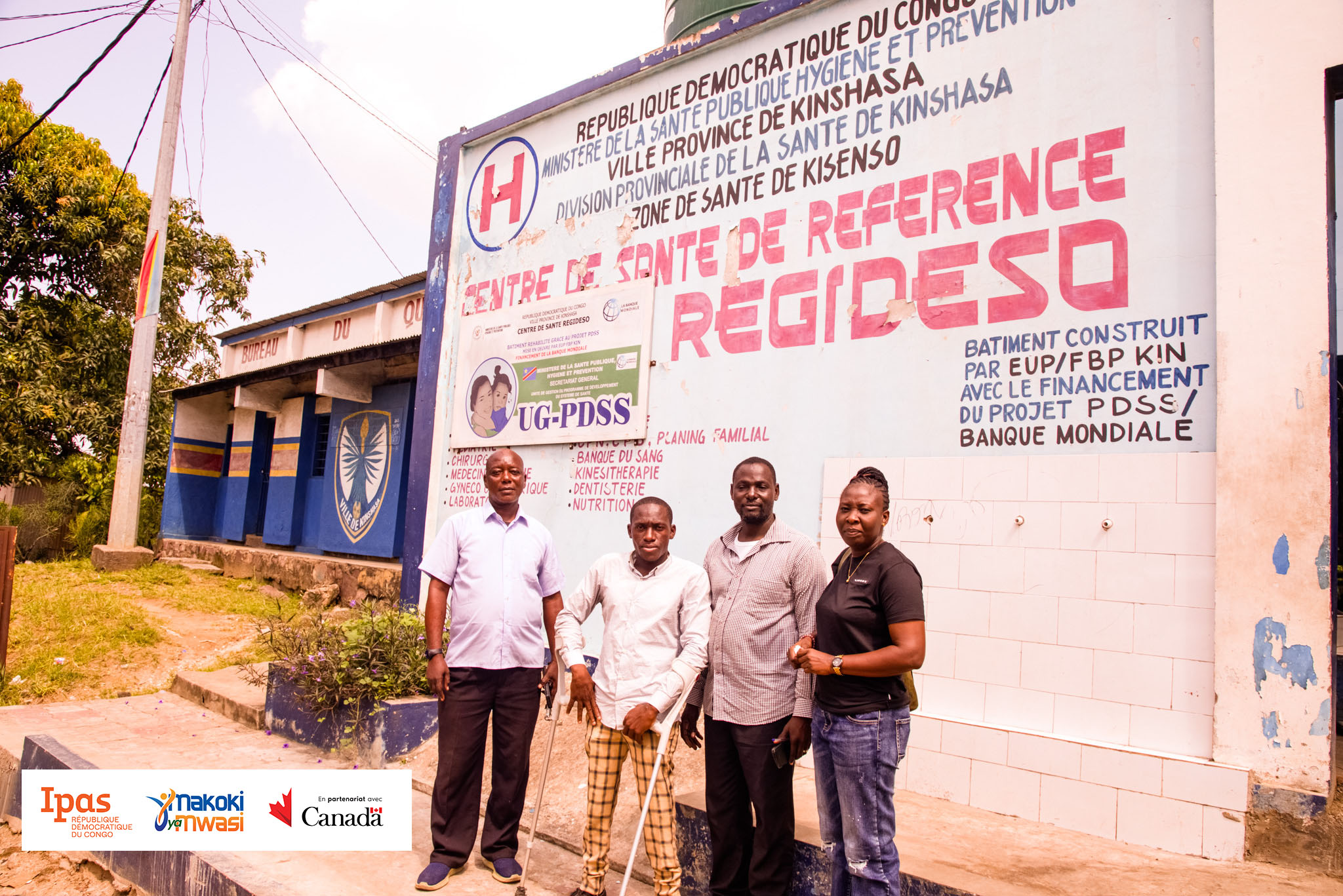
From left to right: the Head nurse, Paul, the Kisenso Area Coordinator, and the Ipas Community Engagement Officer in front of the REGIDESO Reference Health Center
The DRC’s 2003 ratification of the Maputo Protocol was a significant milestone. Article 14 recognizes women’s right to health—including SRH—and requires states to allow access to safe abortion in specific circumstances such as rape, incest, threats to a woman’s physical or mental health, or severe fetal anomaly.
These commitments reflect the core pillars of Ipas DRC’s work :
Expanding access to family planning and SRH services through community‑led sensitization and strong, confidential referral systems guided by RECOs ; Improving quality of care by training providers and ensuring consistent availability of essential supplies ; Centering women and girls by delivering safe, respectful, rights‑based services that uphold their autonomy and dignity.
In Kisenso—a dense and underserved municipality of Kinshasa—Ipas DRC has worked alongside local structures to strengthen the health system. This includes training RECOs, equipping health centers, supporting essential medicines, and building provider capacity. Training sessions on values clarification and attitude transformation (VCAT) have helped both providers and community actors better understand SRH rights, improve responses to gender‑based violence (GBV), and promote access to comprehensive, woman‑centered safe abortion care (SCACF).
Paul has seen this impact firsthand :
With financial support from the Swedish International Development Cooperation Agency (Sida), the REGIDESO maternity now offers a comprehensive package of SRH services—including family planning, antenatal care, GBV management, and access to safe, stigma‑free abortion. Ipas DRC has also established a secure referral circuit to ensure timely and confidential care. Two trained medical providers now offer comprehensive, woman‑centered safe abortion care.
A study by the School of Public Health shows that 68.4% of Kinshasa residents believe abortion is not authorized in the DRC, and 56.1% think women should not access safe abortion services—evidence of persistent misinformation and negative attitudes toward reproductive rights.
Despite these barriers, RECOs continue to to play a decisive role in shifting norms, informing women about family planning, and reducing risks linked to unsafe abortion. Between June and December 2025, community outreach and CAC services helped 98 women—aged 15 and above—avoid life‑threatening complications and maternal death.
This progress shows that even in contexts where stigma and misinformation remain entrenched, community‑driven change and strengthened health systems pave the way for safe, accessible, and rights‑based care.
Today, eight Ipas‑supported health facilities in Kisenso offer SRH services—ensuring that every woman and girl has equitable access, free from exclusion and stigma.