
Ipas DRC
Non-profit organization

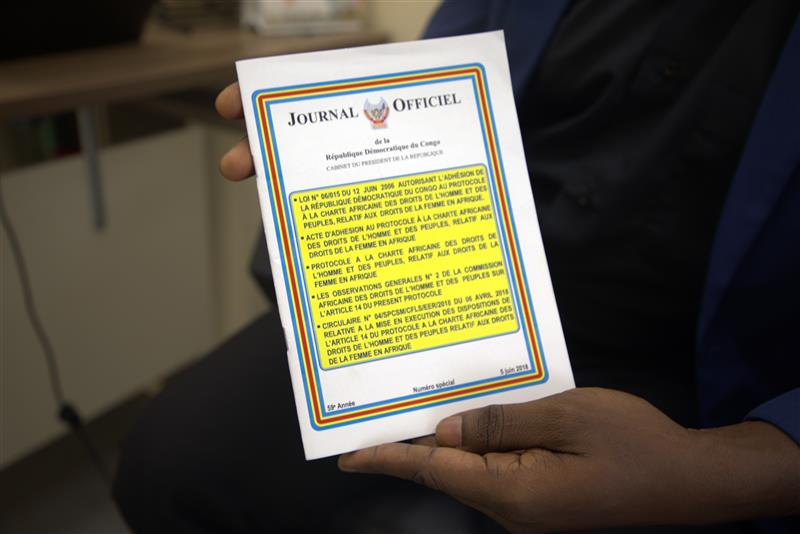
Securing progressive legislation, such as the Maputo Protocol, is an important step towards the realization of sexual and reproductive rights. Transforming these progressive laws into tangible services, equitably accessible without stigmatization, overcharging or rejection, is a journey that requires local ownership and effective community accountability mechanisms.
Since the publication of the Maputo Protocol in the Democrate Republic of Congo’s Official Gazette, making it applicable law in the country, Ipas DRC has been working tirelessly with the Ministry of Health to make it possible to offer safe abortion services.
Beyond the progress made by the Ministry of Health in developing standards and guidelines, strategies and training modules for providers, and the availability of commodities including the Mifepack, real access to safe abortion services remains a real challenge for women, particularly adolescents and young girls.
Access routes remain strewn with barriers, and the healthcare system is not immune to client stigmatization, rejection and judgment, particularly for adolescents, young people and people living with disabilities.
Aware of these challenges, for the past 3 years Ipas RDC has been strengthening community accountability mechanisms, taking advantage of structures set up by the Ministry of Health at local level: the Comité de Développement des Aires de Santé, or “CODESA” for short.
Health Area Development Committees (CODESA) are community structures set up in health areas to strengthen community participation in the management and improvement of health services. They bring together community leaders, women and young people, as well as other key players, and play a central role in community mobilization, local advocacy and the monitoring of health services.
They act as a bridge between the community and health structures, facilitating dialogue, relaying people’s concerns and supporting initiatives to improve the quality and accessibility of care.
Ipas RDC supports CODESAs by, firstly, building the capacity of their members in sexual and reproductive health, safe abortion, family planning and care for survivors of gender-based violence (GBV), in order to improve their understanding and role in promoting these services. Secondly, to improve their functioning and coordination with the health zones; and finally, Ipas supports CODESA in community awareness-raising and advocacy activities, aimed at reducing stigma, breaking down socio-cultural barriers and promoting the integration and use of safe abortion, contraception and care services for survivors of GBV.
With this in mind, the official installation of the Comité de Développement des Aires de Santé (CODESA) office was held in the Kimbanseke Health Zone on January 22, 2026, with financial and technical support from Ipas, thanks to funding from Canadian Global Affairs (GAC). Mr. Patience Lisika, Community Mobilization Advisor at Ipas, emphasized that three key elements ensure the sustainability of healthcare interventions: community accountability, citizen participation and collaboration between the community and healthcare systems.
These elections for CODESA president are an important step in strengthening the community health system and citizen participation in the management of health services. The ceremony was held at the Kimbanseke town hall, in the presence of political, administrative and health authorities, including the town’s Bourgmestre (mayor), the Médecin Chef de Zone (MCZ), the Chef de Division (CD), and other stakeholders.
The Bourgmestre of Kimbanseke commune, Mr. Ngonga Kidumu Jeancy, praised the mobilization of communities and stressed the importance of CODESA as a framework for health management and promotion, serving as a bridge between health services and the community. He urged the president and his office to work closely with health authorities, head nurses and community leaders, and reiterated the commune’s commitment to supporting any initiative aimed at the well-being of women and girls.
This electoral process began on December 23 in the 11 health areas of the Kimbanseke Health Zone, with the election of CODESA (Présicodesa) presidents by community relays, representatives of local communities.
At the end of this first stage, the 11 elected Présicodesa elected the officers of the Union des CODESA (UCODESA), the community coordination and representation body for the health zone. At the end of the ballot, Mr David Makele was elected president of UCODESA and officially installed with his board, made up of 11 Présicodesa representing the different health areas of Kimbanseke, on Thursday January 22, 2026.
The UCODESA president-elect expressed his gratitude for the trust placed in him, and pledged to work closely with health authorities, community leaders and partners to strengthen links between the community and health systems, and facilitate access to care.
This support from Ipas is part of a significant step forward for the health system, marking the strengthening of a structured mechanism for community participation, essential for fostering trust between populations and health structures.