Ipas DRC
Non-profit organization
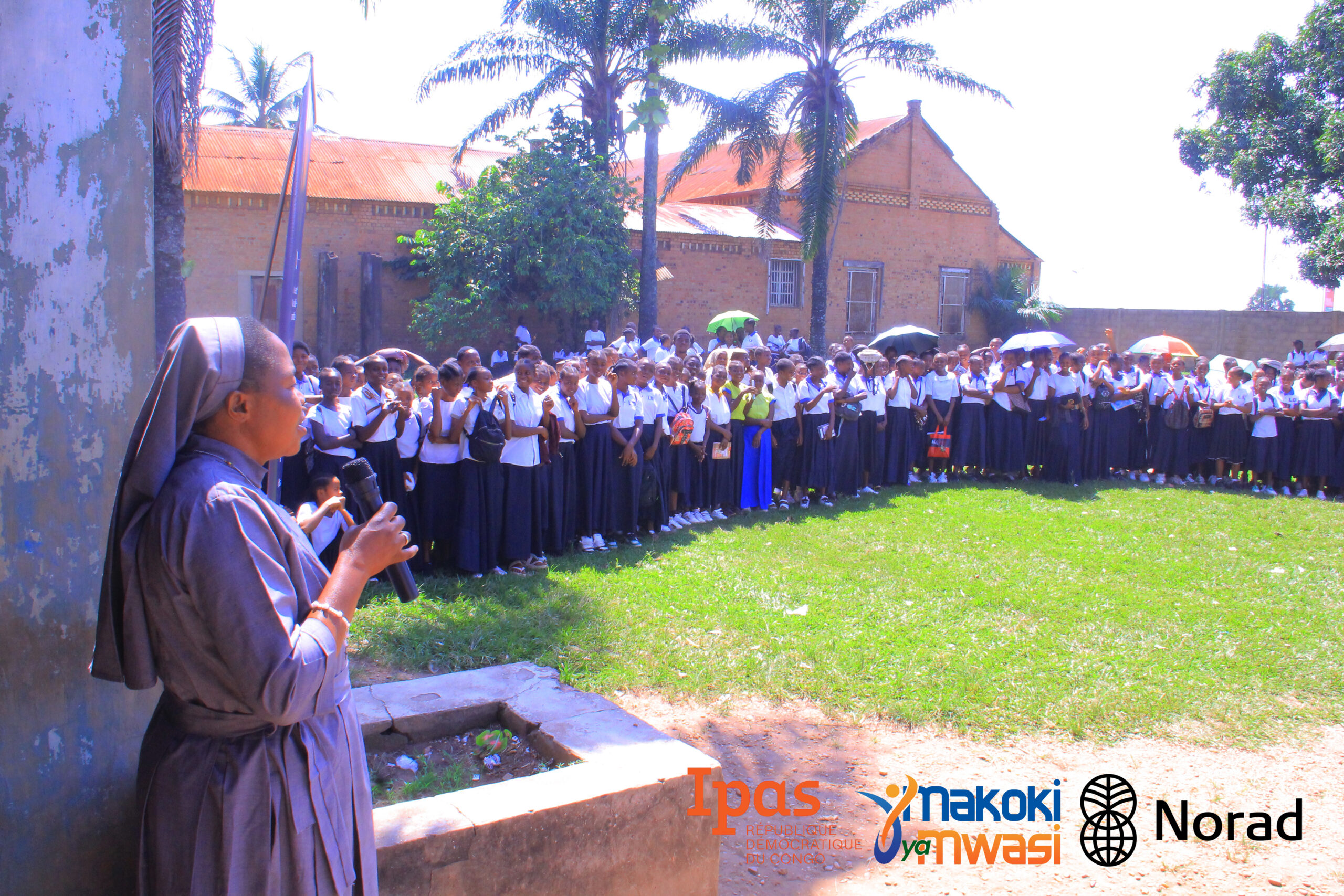
In Kasaï Province, an assessment of the CTS ecosystem—child marriage, adolescent pregnancy, and school dropout— revealed deeply rooted challenges affecting adolescents, particularly girls. These interconnected issues continue to undermine girls’ education, health, and life opportunities. In response, school‑based Health Education Clubs were established in six secondary schools: Institut of Tshikapa, Institut Maker Mwangu, Institut Tshikunga, Institut Diketemene, Institut Kene, and Disanka Secondary School.
The assessment highlighted a worrying context marked by persistently high rates of child marriage and adolescent pregnancy, both of which contribute directly to school dropout among girls. These dynamics reinforce cycles of vulnerability and exclusion, limiting girls’ ability to remain in school and exercise their rights.
According to MICS 2017–2018, 54 percent of women aged 20 to 24 in Kasaï were married before the age of 18—nearly twice the national average of 29 percent. Between 2021 and 2024, 425 cases of child marriage were officially recorded in the province, most involving girls aged 15 to 17. These figures illustrate the scale of the challenge and underscore the urgent need for targeted, school‑ and community‑based interventions that address root causes and strengthen protective environments for adolescents.
The Health Education clubs have become safe, empowering, and transformative spaces for adolescents, strengthening students’ knowledge through structured learning, building teachers’ capacity to deliver comprehensive sexuality education, and encouraging young people to engage in peer‑to‑peer awareness‑raising.
Each club brings together 20 students (12 girls and 8 boys) and is supported by Ipas DRC over a three‑month period. Participants engage in eight structured learning modules covering key themes such as HIV and STI prevention, adolescent pregnancy and child marriage, healthy relationships, consent, gender, and community engagement—equipping them with knowledge and skills to make informed decisions and support their peers.
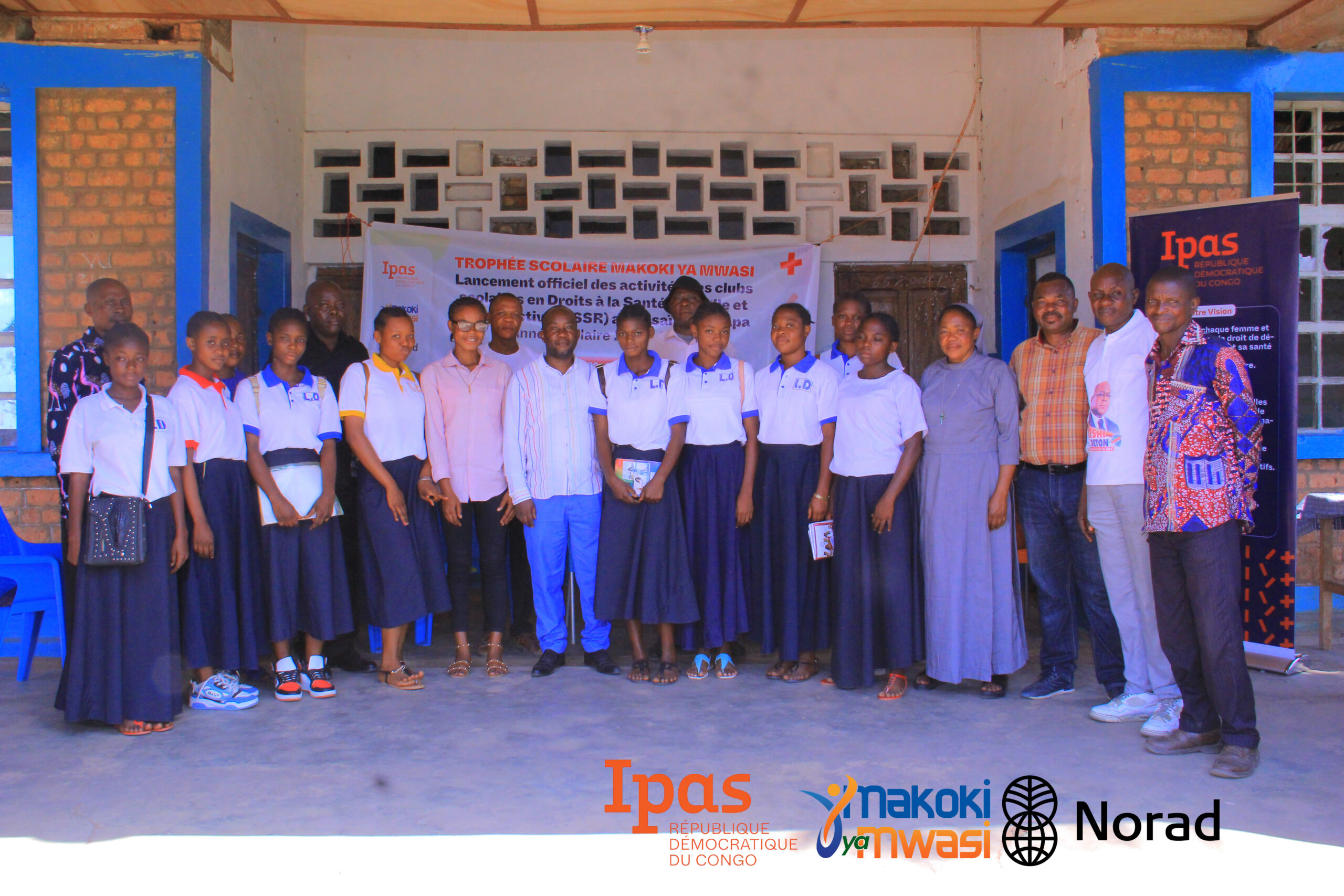
The results of this approach have been tangible. One hundred and twenty students were directly trained and subsequently shared their knowledge with more than 1,400 fellow students. The initiative also culminated in an inter‑school competition that mobilized nearly 6,000 participants, with Institut Tshikunga awarded the Makoki ya Mwasi Trophy 2025—a strong indicator of the programme’s reach, relevance, and impact.
Building on this momentum, the second edition of the initiative (2025–2026) was officially launched at Disanka Secondary School, in the presence of provincial education authorities, teachers, parents, and more than 800 students. This launch marked a new phase of collective engagement to advance adolescents’ sexual and reproductive health and rights within school communities.
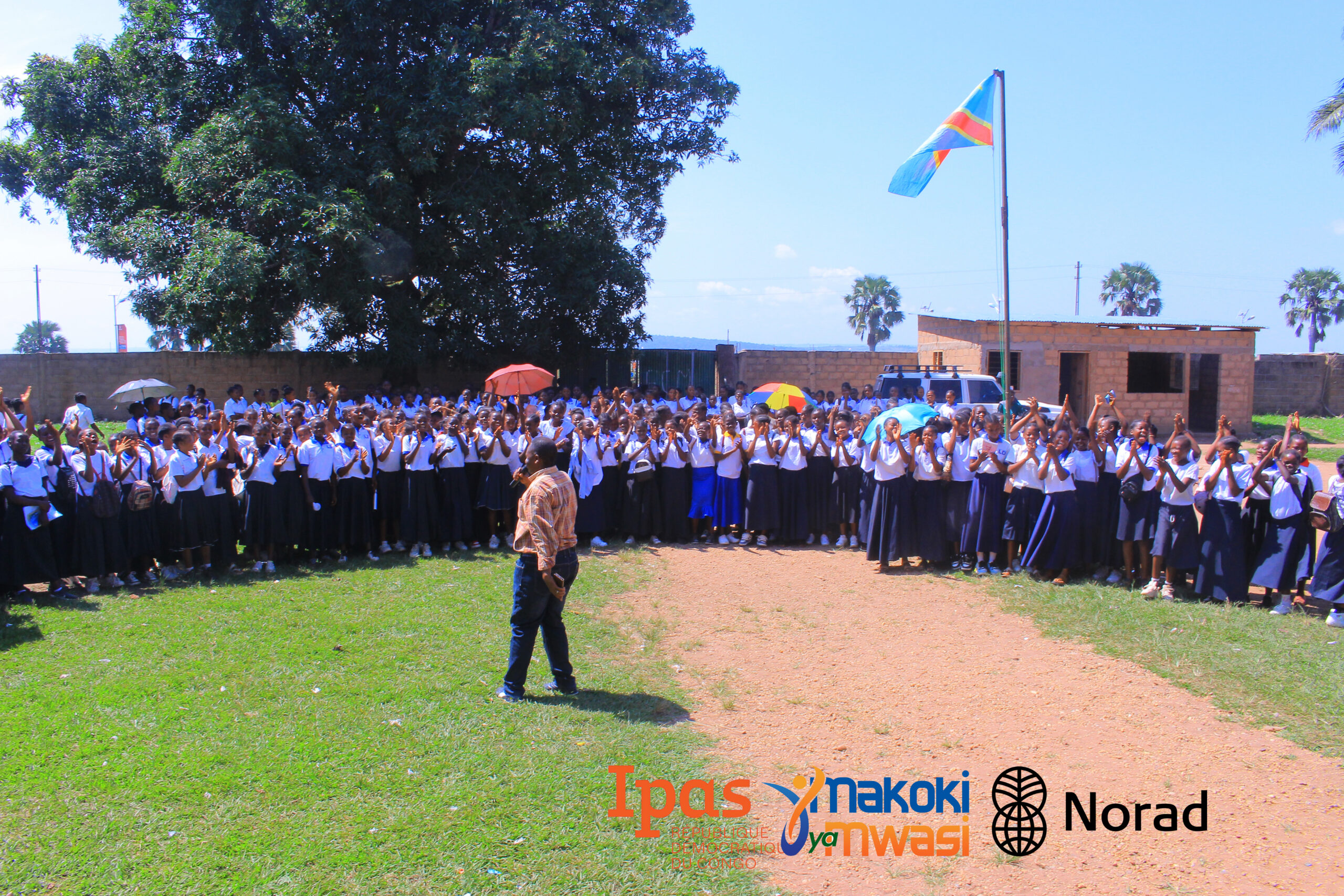
The Health Education clubs respond to a broader national challenge. In the Democratic Republic of Congo, 66.3 percent of students who dropped out of school in 2017–2018 were girls, with pregnancy cited as one of the leading reasons. A study conducted in Kinshasa by the National Service for Women and Development under the Ministry of Gender, Family and Children revealed that, despite legal provisions allowing pregnant girls to remain in school, significant barriers persist in practice.
School dropout rates were already alarmingly high as early as 2013, exceeding 22 percent in both the first and final years of primary education. Out of nearly three million children enrolled in first grade, approximately 700,000 left school during or at the end of the academic year. These figures highlight the urgent need for coordinated, preventive interventions that address both structural and social determinants.
Despite these challenges, the clubs have contributed to meaningful change at the school level. As noted by Joseph Muyaya, Principal of Institut Maker Mwangu:
“ By the end of the school year, the results were remarkable. We recorded zero cases of pregnancy among girls. It was a year that brought us great satisfaction. . “
Beyond this outcome, he also observed a shift in behaviour: girls reported fewer cases of harassment and demonstrated greater confidence in protecting themselves, asserting their rights, and making informed decisions.
Implemented by Ipas DRC with support from the Norad project, the Health Education clubs demonstrate that community engagement goes beyond awareness‑raising. It equips adolescents—girls and boys alike—with the knowledge, skills, and confidence to understand their rights, defend them, and put them into practice.
The programme will conclude in May with the second edition of the “Makoki Ya Mwasi” inter‑school competition, celebrating students’ intelligence, creativity, courage, and civic engagement—hallmarks of a generation better prepared to shape its future.